
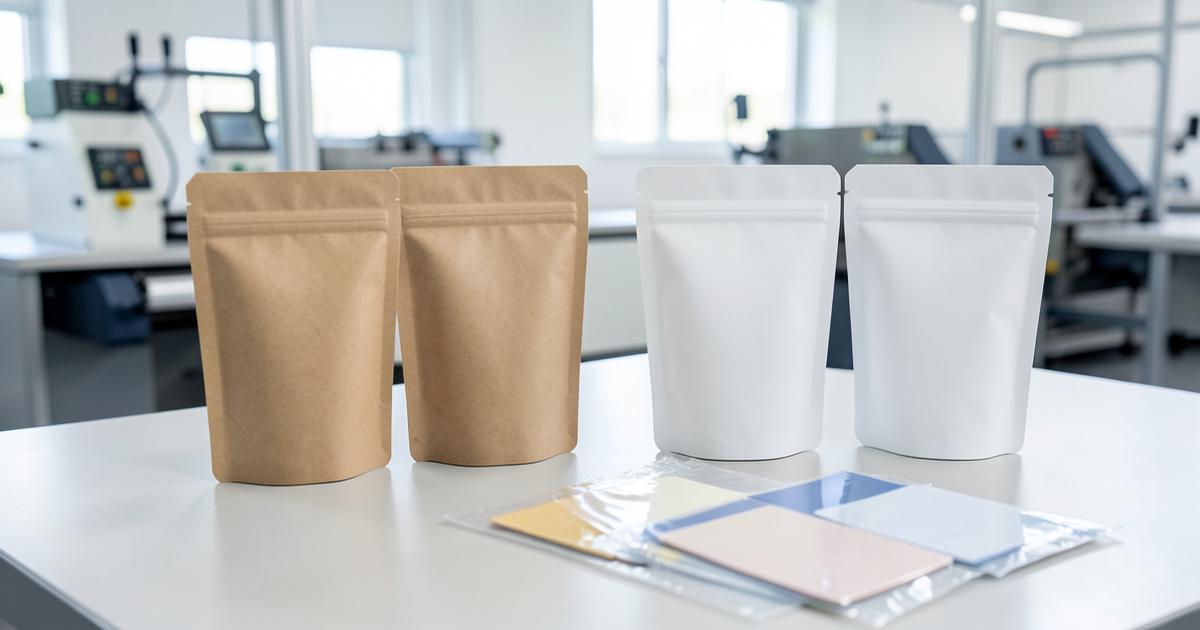
For emerging brands and established companies alike, the strategy for entering a new market has shifted away from massive inventory buys toward nimble, iterative releases. Short run flexible packaging provides the structural integrity and high-end aesthetics required for retail without the financial burden of high minimum order quantities. This guide examines how leveraging smaller production runs can transform your product launch from a high-risk gamble into a data-driven success.
For emerging brands and established companies alike, the strategy for entering a new market has shifted away from massive inventory buys toward nimble, iterative releases. Short run flexible packaging provides the structural integrity and high-end aesthetics required for retail without the financial burden of high minimum order quantities. This guide examines how leveraging smaller production runs can transform your product launch from a high-risk gamble into a data-driven success.
The Shift from Bulk to Agility
Historically, the packaging industry was built on the back of rotogravure and flexographic printing. These methods involve high setup costs, including the physical engraving of metal cylinders or the creation of polymer plates. To amortize these costs, manufacturers required massive minimum orders, often exceeding 50,000 or 100,000 units. For a company testing a new flavor profile or a seasonal snack, this created an immediate barrier to entry.
Today, the landscape has changed. Brands no longer want to tie up their capital in thousands of pounds of unused roll stock. Short run flexible packaging has emerged as the solution for brands that need to be lean. By utilizing technology that bypasses plate-making, manufacturers can now produce high-quality pouches in quantities as low as 500 to 2,000 units. This allows brands to pivot quickly based on consumer feedback rather than being stuck with obsolete inventory.
Economic Benefits of Short Run Flexible Packaging
The most immediate advantage of small-batch production is the preservation of working capital. When you are not forced to buy six months' worth of packaging upfront, you can reallocate those funds into marketing, R&D, or distribution logistics.
Lowering Initial Capital Expenditure
Traditional printing requires an upfront investment in plates for every color used in the design. If your stand-up pouch has seven colors, you might pay several thousand dollars before a single bag is printed. Short-run digital methods eliminate these plate charges entirely. This makes it feasible to launch five different SKUs simultaneously to see which one resonates with the audience, without five separate sets of plate fees.
Reduced Storage and Waste
Inventory carries a hidden cost. Warehousing space, climate control, and the risk of the material becoming brittle or the adhesive failing over time are real concerns. Furthermore, if the FDA changes a labeling requirement or you decide to update your ingredient list, thousands of pre-printed bags become landfill waste. Low quantity packaging ensures you only have what you need for the current sales cycle.
Digital Printing: The Engine Behind Short-Run Pouches
Digital printing is the primary technology enabling the short-run revolution. Unlike traditional presses, digital presses function much like a high-end office printer but on a massive scale and with industrial-grade inks.
Photographic Quality and Consistency
One common misconception is that short-run means lower quality. In reality, digital printing often offers higher resolution and better color registration than traditional methods. Brands can achieve vibrant, photographic-quality imagery that stands out on the shelf. Because the process is software-driven, the color on the first pouch is identical to the color on the thousandth, ensuring brand consistency across different production batches.
Variable Data and Versioning
Digital technology allows for "versioning." If you are launching a granola line, you can print 500 bags of "Original," 500 of "Honey Nut," and 500 of "Dark Chocolate" in a single print run. Since there are no plates to swap out, the press simply changes the art file on the fly. This level of customization was impossible a decade ago without a massive budget.
Reducing Risk with Low Quantity Packaging
Product launches are inherently risky. Market research can only tell you so much; real-world sales data is the ultimate truth. Using low quantity packaging allows you to conduct "live market testing."
For example, a boutique coffee roaster might want to test a compostable material versus a standard high-barrier Mylar. By ordering short runs of both, they can gauge consumer preference and material performance in the real world. If the product fails to gain traction, the financial loss is limited to a few hundred bags rather than a warehouse full of plastic.
Speed to Market: The Competitive Advantage
In the CPG (Consumer Packaged Goods) world, timing is everything. Traditional packaging lead times often stretch between 8 and 12 weeks. When you factor in the time for plate production and shipping from overseas, a brand might wait three months just to get their product on the shelf.
Short run flexible packaging providers typically operate with lead times of 15 to 20 business days. This speed allows brands to react to trends. If a specific ingredient goes viral on social media, a nimble brand can design, print, and pack a new product in under a month, capturing the trend while it is still relevant.
Sustainable Practices in Small Batches
Sustainability is no longer a niche requirement; it is a consumer expectation. Short-run production is inherently more sustainable because it drastically reduces overproduction and obsolescence. Furthermore, many modern short-run facilities utilize water-based or soy-based inks and offer recyclable or compostable films. By ordering only what you need, you reduce the carbon footprint associated with shipping and storing excess mass.
Conclusion
Choosing short run flexible packaging is a strategic move for any brand looking to innovate without the weight of traditional manufacturing constraints. It bridges the gap between a prototype and a full-scale national rollout, offering the professional look of a global brand with the flexibility of a startup. By focusing on low MOQs and digital precision, you can ensure your next product launch is defined by its agility and market responsiveness rather than its overhead costs.
Conclusion
Ultimately, short run flexible packaging empowers brands to prioritize innovation over inventory. By reducing the financial barrier to entry and accelerating production timelines, it has become the gold standard for modern product launches. Whether you are a startup or a Fortune 500 company testing a new concept, the ability to print small, learn fast, and scale quickly is the most valuable tool in your packaging arsenal.
Keep reading: review MOQ realities for new brands, compare digital short-run printing, or see how buy-to-demand fits a launch plan.