
Chicago sits in the middle of the country's food manufacturing map, which is convenient for brands and, oddly, not always convenient for packaging. Plenty of local companies still buy printed pouches from overseas suppliers with long minimums and longer transit times, then spend their year managing inventory around a six-to-ten week resupply clock.
Sourcing custom flexible packaging regionally changes that math. Here is what the decision actually involves.
What "custom flexible packaging" covers
The category spans printed film in several finished forms.
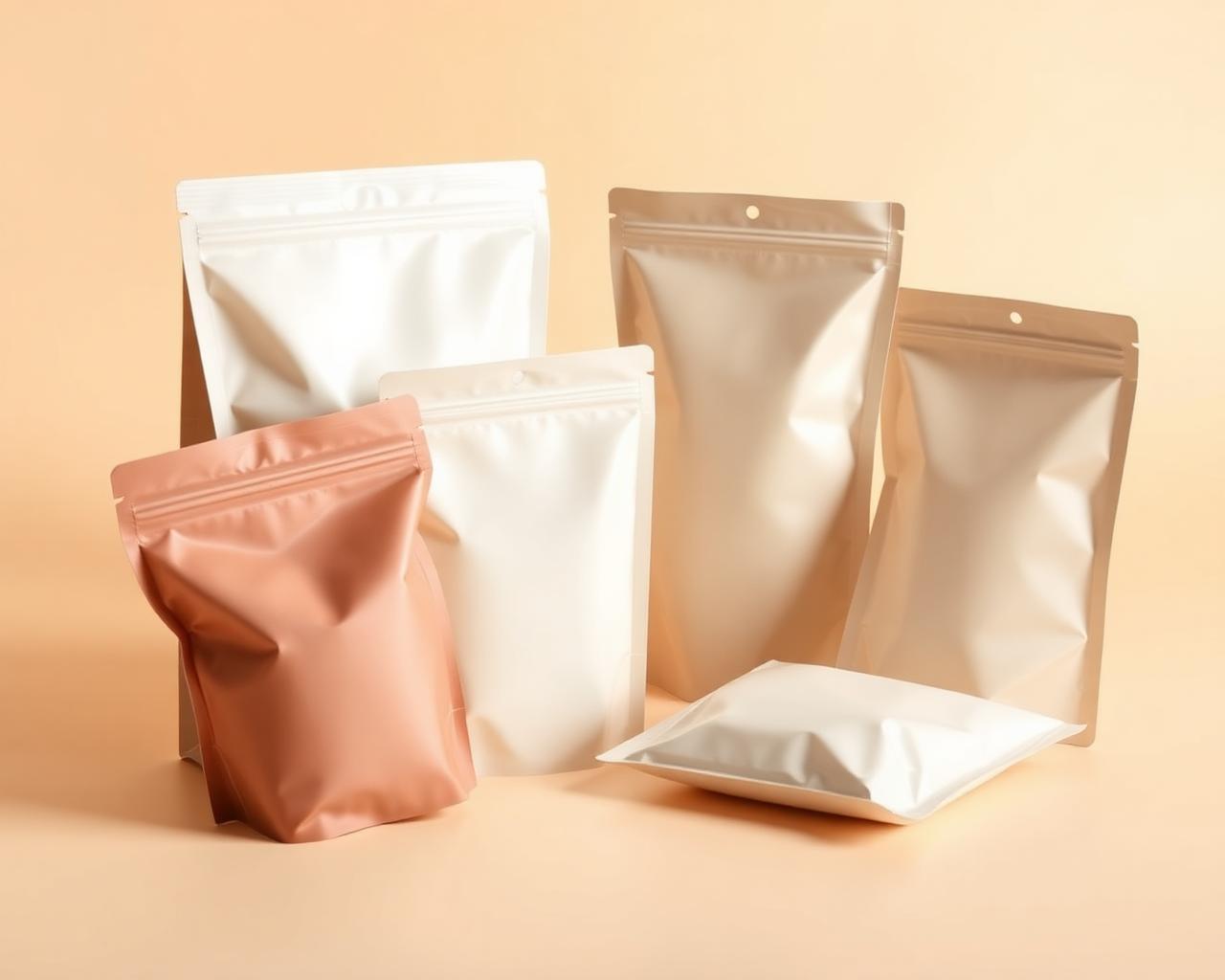
Stand-up pouches arrive fully converted and ready to fill, with optional zippers, valves, spouts, tear notches and hang holes. They are the format of choice for hand filling and co-packers, and they present the strongest face on a retail shelf.
Flat-bottom, quad-seal and lay-flat formats trade cost for shelf presence and cube efficiency in different directions.
Roll stock feeds form-fill-seal lines. Cheapest per unit, lowest storage footprint, and the most demanding to specify — web width, core, unwind direction, film stiffness and registration marks all have to match your machine.
Underneath every one of those is a laminate: typically a printed outer web bonded to a sealant layer, sometimes with a metallized or foil layer between for barrier, sometimes with nylon for toughness.
Getting the structure right
The structure is chosen from product chemistry, fill method and target shelf life, not from format.
PET/PE laminates suit dry goods and products with moderate barrier needs. Metallized PET/VMPET/PE blocks oxygen and light for coffee, nuts, snacks and supplements, where oxidation is what ends shelf life. Foil laminations sit at the top of the barrier range. Nylon-containing structures resist puncture and flex cracking for heavy, sharp or frozen contents. Kraft laminates deliver a natural appearance with a functional barrier behind it.
Recyclable mono-material PE structures and PCR-content films are available across most of these applications. They seal in a narrower window than conventional laminates, so they deserve a trial run before a top SKU is converted. Our sustainability options explain the tradeoffs plainly.
Digital printing and why it fits growing brands
Traditional rotogravure requires an engraved cylinder per color. Excellent for one locked design at very high volume; expensive and slow for anything that changes.
Digital printing removes tooling from the equation. Setup is a file, so running eight SKUs costs roughly what running one costs, revisions are a new PDF rather than new cylinders, and short and medium runs price sensibly. For a brand adding flavors, testing pack sizes or serving retailer-specific programs, that flexibility usually outweighs a marginally lower unit price at scale.
The practical rule: if your artwork is stable and volume per design is very high, gravure earns its tooling back. Otherwise, digital produces lower total cost for the way most growing brands actually buy.
The regional freight and time argument
Pouches are light and take up space, so freight is a meaningful share of landed cost. A shorter lane costs less and exposes the shipment to less handling.
Time is the larger effect. When production is two weeks and ocean freight, customs and drayage are six, the transit is your real lead time — and it is the part you cannot expedite. Producing in the Midwest collapses that portion and puts reorder cycles inside a range where you can buy to actual demand rather than forecast a quarter ahead. That is the basis of our buy-to-demand model.
Proximity also changes how problems get solved. A seal issue on your filling line is a conversation and, if needed, a visit, rather than a photo exchange across twelve time zones.
What to prepare before requesting a quote
Suppliers can only engineer a package from real inputs. Have these ready:
Product and fill weight. Fill method — hand, co-packer, VFFS or HFFS. Target shelf life. Format and dimensions, or the closest reference pack you have. Features needed: zipper, valve, spout, notch, hang hole, window. Number of SKUs and quantity per SKU. Any retailer or regulatory requirements on the label.
With that, you should receive a recommended structure and reasoning, unit price with tooling and freight broken out, MOQ per SKU, and lead time measured from artwork approval.
Artwork, briefly
Build to the supplied dieline. Keep logos and critical copy clear of seals and the bottom gusset. Work in CMYK with Pantone references specified for brand colors. Include bleed. Ask for a physical proof when color is critical — matte laminations in particular change how saturated colors read.
Getting started
If you are producing in Chicago, Illinois or the wider Midwest and want a specification and price for your product, send the details above through our contact form. You will get a structure recommendation, a format, pricing and a realistic timeline.