
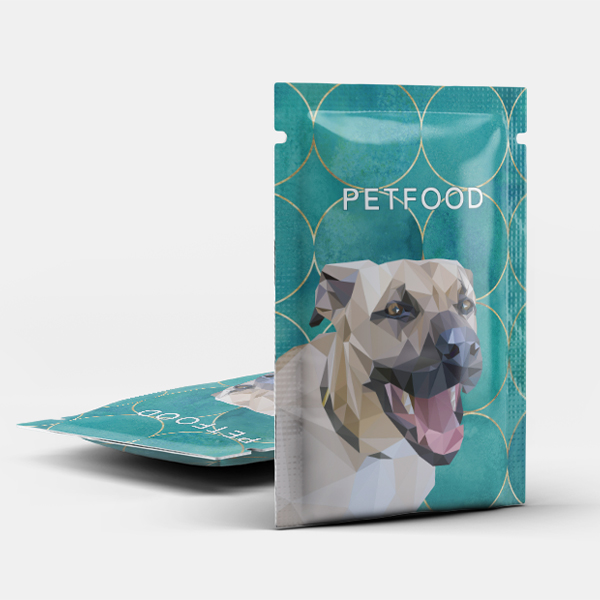
Small brands rarely fail because they picked the wrong laminate. They struggle because packaging demands a large cash commitment before there is enough sales data to justify it — 25,000 pouches of a design that changes in four months, ordered because the minimum said so.
For a small business in Chicago or the surrounding Midwest, the useful question is not just which package is best, but which package lets you launch, learn and adjust without locking up working capital.
Start with the format
Stand-up pouches are the default for most food, beverage-adjacent, pet, supplement and personal care products at small scale. They arrive finished, so they can be hand-filled or run through a simple sealer without capital equipment. They stand on a shelf and present a full graphic face to a shopper. Zippers, tear notches and hang holes are straightforward additions.
Lay-flat and pillow pouches cost less and suit single-serve items, samples, and products sold in cases rather than on a shelf face.
Flat-bottom and quad-seal bags stand more rigidly and use shelf space efficiently for larger fills, at higher tooling and unit cost. Worth it for coffee and premium dry goods where the block shape reads as substantial.
Roll stock is the right answer once you have form-fill-seal equipment, or a co-packer who does. It is the cheapest per unit and the most demanding on specification, because the film has to match the machine.
Our packaging solutions page walks through each format in more detail.
Then the structure
Match the laminate to what the product actually needs.
Dry goods with modest barrier requirements — pasta, baking mixes, bath salts, pet treats — usually run well on a PET/PE laminate. Products that oxidize, including coffee, nuts, granola, snack foods and supplements, need a metallized structure to block oxygen and light. Fresh-roasted coffee also needs a degassing valve. Sharp or heavy products benefit from nylon in the structure for puncture resistance. Frozen items need a sealant that stays flexible cold and enough seal width to tolerate wet fills.
Under-specifying barrier is the most costly small-business packaging mistake, because it does not show up until the product on shelf goes stale and a retailer stops reordering.
Low minimums are a cash strategy
The right MOQ for a young brand is the smallest quantity that still prices reasonably. Two reasons.
First, artwork changes. Net weights get adjusted, claims get added, a retailer wants a different callout, a flavor gets renamed. Every one of those turns leftover inventory into scrap.
Second, demand is unknown. Before real sell-through data exists, a big buy is a guess with your working capital attached to it.
Digital printing is what makes small quantities economical. Without plates or engraved cylinders, there is no five-figure tooling charge to amortize, so a 2,500-unit run is a normal job rather than an exception. It also means you can run four flavors in one order instead of committing to one.
Our buy-to-demand model is built for exactly this: order what the next few months need, learn from sell-through, and scale the SKUs that earn it.
Design decisions that punch above their cost
Small brands sit on shelves next to companies with far bigger design budgets. A few choices close most of that gap.
A matte or soft-touch finish changes perceived value more per dollar than almost anything else you can specify.
Contrast and hierarchy beat detail. At shopping distance, a shopper reads brand, category and flavor, in that order. If all three compete for attention, none of them land.
Keep critical elements out of the gusset and seal areas. On a stand-up pouch, part of the bottom artwork disappears when the pouch is standing.
Ask for a physical proof. A monitor cannot show you how a matte lamination mutes a saturated color.
Practical timeline for a launch
Plan backwards from the date you need product on shelf. Typical sequence: structure and format decision, quote, artwork prepared to the supplied dieline, prepress and proof, approval, print and convert, freight. The steps most likely to slip are artwork and approval, both of which are on your side of the line.
Send print-ready files built on the supplied dieline, in CMYK with Pantone references called out, with bleed included. That single habit removes more delay than any expedite fee.
Working with a regional supplier
Producing in the Midwest shortens the freight lane to most of the country, keeps your account contact in your working hours, and makes it realistic to resolve a technical issue in a day rather than a week. For a brand reordering in modest quantities every few months, that responsiveness matters more than it does for a company buying a container twice a year.
If you are packaging a product in Chicago or nearby and want a structure recommendation with real pricing, send your product type, fill weight, fill method and expected quantity per SKU through our contact form.